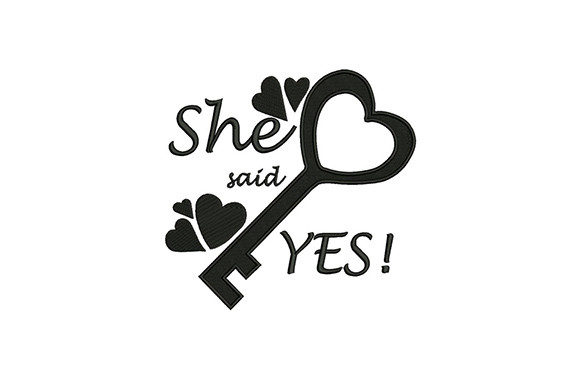
She Said Yes: A Designer’s Review for Business Merch
As an embroidery designer who has spent years digitizing files and consulting with small business owners, I approach every new machine embroidery design with a critical eye. It is not just about whether a motif looks cute on a screen; it is about how it performs in the real world of commercial production. Recently, I reviewed the She Said Yes design, a piece categorized under Valentine S Day themes but possessing far broader potential for branded merchandise. If you are running an embroidery shop, a handmade brand, or a boutique looking to expand your product line, this review breaks down how this design functions as a serious business asset.
First Impressions: Balancing Joy with Professionalism
The initial visual impact of She Said Yes is undeniably cheerful. The description promises a "happy embroidery" meant to show excitement, and the design delivers on that emotional cue. For a professional decorator, the challenge is often taking celebratory or romantic concepts and translating them into something that feels premium rather than novelty-grade. This design leans into a friendly, approachable aesthetic. It does not try to be overly ornate or rigidly corporate, which makes it an excellent candidate for lifestyle brands, creative studios, and local businesses that want to project warmth.
However, from a technical standpoint, the success of this design hinges on its versatility. The description notes that it comes with multiple embroidery options, which is a crucial feature for business use. Having size variations allows you to adapt the artwork for different applications, from a subtle chest logo on a staff uniform to a bold statement on the back of a jacket. This flexibility is what separates a hobbyist file from a viable commercial tool.
Real-World Applications for Small Business Merch
When evaluating She Said Yes for client projects, I immediately looked beyond the traditional wedding context. While it is perfect for bridal shops or photographers specializing in engagements, its application in general small business merch is vast. Here is how I envision this design performing across various product lines:
- Embroidered Patches: This is perhaps the strongest use case. A well-digitized version of this text-based or icon-driven design can serve as a high-margin add-on item. Patches allow customers to personalize denim jackets, canvas totes, or hats without committing to permanent embroidery on the garment itself.
- Café and Boutique Uniforms: Imagine a local bakery or florist using this design on aprons during peak engagement seasons. It adds a layer of personality to staff uniforms, making the team feel more connected to the joyous moments of their customers. It transforms a standard work shirt into a conversation starter.
- Tote Bag Design: Canvas tote bags are a staple for Etsy sellers and craft fairs. Placing She Said Yes centrally on a tote creates an instant gift item for bridesmaids, bachelorette parties, or anniversary celebrations. The sturdy fabric of a tote handles stitch density well, ensuring the text remains legible and crisp.
- Cap Embroidery: For a more subtle approach, a simplified version of this design works beautifully on the front panel of a dad hat or trucker cap. This is ideal for creating limited-edition drops for apparel brands that want to tap into the celebration market without being overly flashy.
Technical Considerations and Production Notes
While the artistic merit of She Said Yes is clear, the technical execution requires careful attention. As a designer, I always advise testing any new digital embroidery file before offering it as a finished product. Here are the specific factors you must evaluate to ensure quality control:
Stitch Density and Fabric Texture: Text-based designs can sometimes suffer from poor readability if the stitch density is too high on textured fabrics like terry cloth towels or thick sweatshirts. Conversely, if the density is too low on thin cotton, the fabric may pucker. You must test this design on the specific materials you plan to sell. If you are offering custom apparel, create a sample run on both light and dark fabrics to check for visibility.
Thread Colors and Contrast: The description mentions stitching on jackets, sweatshirts, and t-shirts. To maintain brand identity, you need to ensure the thread colors contrast sufficiently with the garment. A pastel thread on a white shirt will vanish. I recommend creating a printable mockup that shows the design in high-contrast combinations, such as navy thread on heather gray or white thread on black, to demonstrate viability to clients.
Hoop Size and Placement: Since the file comes with multiple sizes, confirm the hoop size requirements for each variant. For smaller applications like pocket logos or sleeve details, ensure the lettering remains thick enough to stitch out cleanly without breaking. Tiny lettering is the enemy of durability, especially on items that undergo frequent washing.
Stabilizer Selection: Do not underestimate the role of the stabilizer. For stretchy fabrics like t-shirts, a cut-away stabilizer is non-negotiable to prevent distortion of the She Said Yes text over time. For woven fabrics like aprons or tote bags, a tear-away may suffice, but always test for residue and ease of removal.
Enhancing Brand Identity and Customer Trust
Using a design like She Said Yes is not just about adding decoration; it is about strengthening your brand identity. When a customer sees consistent, high-quality embroidery on your merchandise, it builds trust. It signals that you care about the details. For handmade product sellers, this level of professionalism distinguishes you from mass-produced competitors.
Furthermore, this design can drive buyer engagement. It taps into an emotional narrative—celebration, love, and milestones. By incorporating this into your design assets, you are not just selling a patch or a shirt; you are selling a way for your customers to express their happiness. This emotional connection increases the perceived value of the finished product, allowing for healthier profit margins.
Final Verdict and Licensing Checks
Before integrating She Said Yes into your commercial embroidery workflow, there are administrative steps you cannot skip. First, verify the commercial licensing terms. Just because a file is available for purchase does not automatically grant you the right to use it on unlimited physical goods for sale. Check the license agreement included with the download.
Second, inspect the file formats. Ensure you have the correct extensions for your machines (such as PES, DST, or EXP). If the design includes complex gradients or satin stitches, run a simulation to check for thread breaks or excessive jump stitches that could slow down production.
In conclusion, She Said Yes is a versatile addition to your library if handled with technical precision. It moves beyond simple Valentine S Day decor to become a functional element of small business merch, capable of elevating aprons, caps, and patches alike. By focusing on proper stabilizer use, thread contrast, and strategic placement, you can transform this happy embroidery into a profitable component of your brand’s visual story. Always prioritize a test stitch on your actual inventory fabric, and let the quality of the final product speak for your craftsmanship.